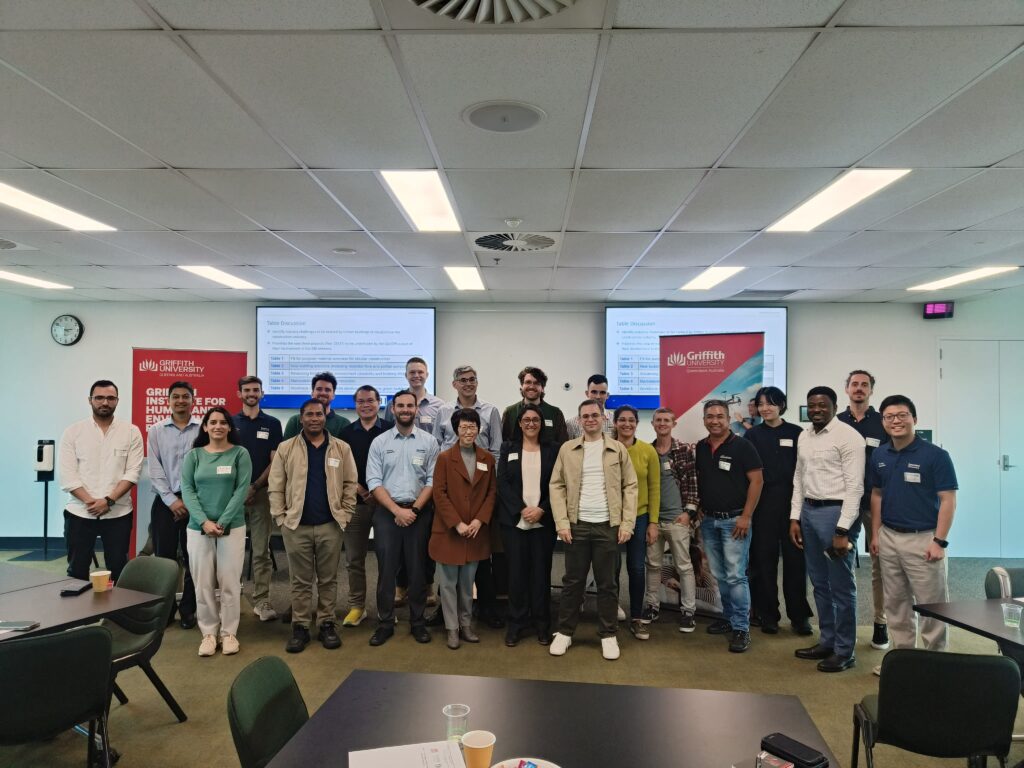
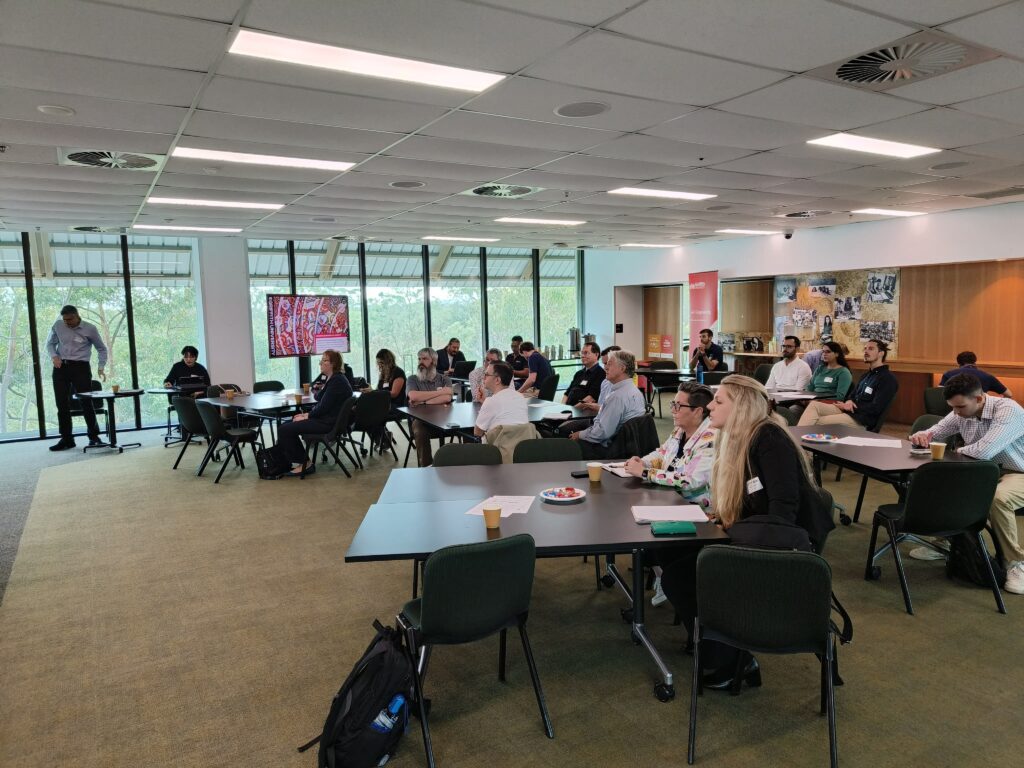
Following the expert presentations at the third DBI Workshop held at Griffith University on 26 June 2026, participants took part in facilitated roundtable discussions. These sessions were designed to move from broad conversation to concrete, actionable research proposals. Five tables explored a dedicated theme and each developed a specific proposed research project for the Queensland Department of Primary Industries (DPI) to consider advancing through the DBI Network. DPI has been invited to select three of these priorities, with progress to be reported at future workshops.
Fit-for-Purpose Material Selection for Circular Construction
Designing for Deconstruction and Maximising Material Recovery
This table focused on how buildings can be designed from the outset to support material recovery and reuse. Participants discussed the importance of design-for-deconstruction principles, standardising building elements to reduce off-cuts, and creating economic incentives for salvaging materials from demolition. They also explored using repurposed engineered wood products in low-load applications such as ceiling and floor panels, and designing buildings so that moisture damage or decay can be addressed by replacing individual components rather than requiring full deconstruction. The proposed research project calls for investigating optimal applications for repurposed timber products while developing practical design-for-deconstruction strategies that maximise material recovery at end of life.
New Building Solutions (Including Repurposed Fibre and Prefab Components)
Standardised Modular Systems Using Repurposed Materials
Participants examined how modular and prefabricated construction could better incorporate repurposed timber and fibre materials. Key discussion points included the need to standardise designs to accommodate variable material availability, logistical challenges around manufacturing capacity and fluctuating demand, and identifying which building types (such as single homes versus apartments) are best suited to these materials. The group also considered the role of performance testing, government policy pathways, and potential incentives such as tax credits or rebates. The resulting research proposal focuses on developing standardised modular building systems that maximise the use of repurposed fibre and prefabricated timber components while evaluating structural performance, manufacturability, and supportive policy mechanisms.
Advancing Timber in the Built Environment (Durability and Building Life)
Building the Evidence Base for Long-Term Performance
This discussion centred on the significant gaps in real-world data regarding the long-term durability, fire performance, and service life of timber — especially repurposed timber and hybrid systems. Participants noted that while laboratory studies on decay exist, there is limited data from actual buildings that accounts for connections, geometry, climate exposure, and construction detailing. They also highlighted the absence of Australian standards for durability design when using repurposed wood. The proposed research project aims to collect real-world service life data and develop better prediction models to support updated design standards, improve engineering guidance, and enable greater confidence in timber reuse and long-term carbon storage.
Marketability of Timber in Construction
Creating Competitive Pathways for Repurposed Timber
This table explored the commercial realities of expanding the market for repurposed timber products. Discussions covered manufacturer perspectives, health and safety concerns with treated timber, variability in construction waste, and questions around pricing, service life, and competitiveness against virgin and imported timber as well as alternative materials like steel. Participants emphasised the need for better traceability, clearer differentiation between hardwood and softwood reuse potential, and government incentives to support industry development. The proposed research project focuses on assessing the financial viability of producing repurposed timber products, evaluating likely price points, and identifying policy measures and operational improvements that could strengthen this emerging value chain.
Workforce Capability and Skills Development Towards Green Buildings
Building Skills and Capability for Modern Timber Construction
The final table addressed the critical need to develop a skilled workforce capable of delivering modern timber construction. Participants discussed perceptions of timber, the importance of specialised training, and the potential role of micro-credentials, pilot projects, and full-scale demonstration facilities. They also explored opportunities for upskilling existing workers, the need for new trades such as prefabrication competency, and stronger collaboration between industry, universities, vocational providers, and timber associations in curriculum development. The resulting research proposal calls for creating an integrated education and workforce development framework, including pilot training programs and investigation into the effectiveness of micro-credentials and stackable qualifications to support the transition to sustainable timber construction.
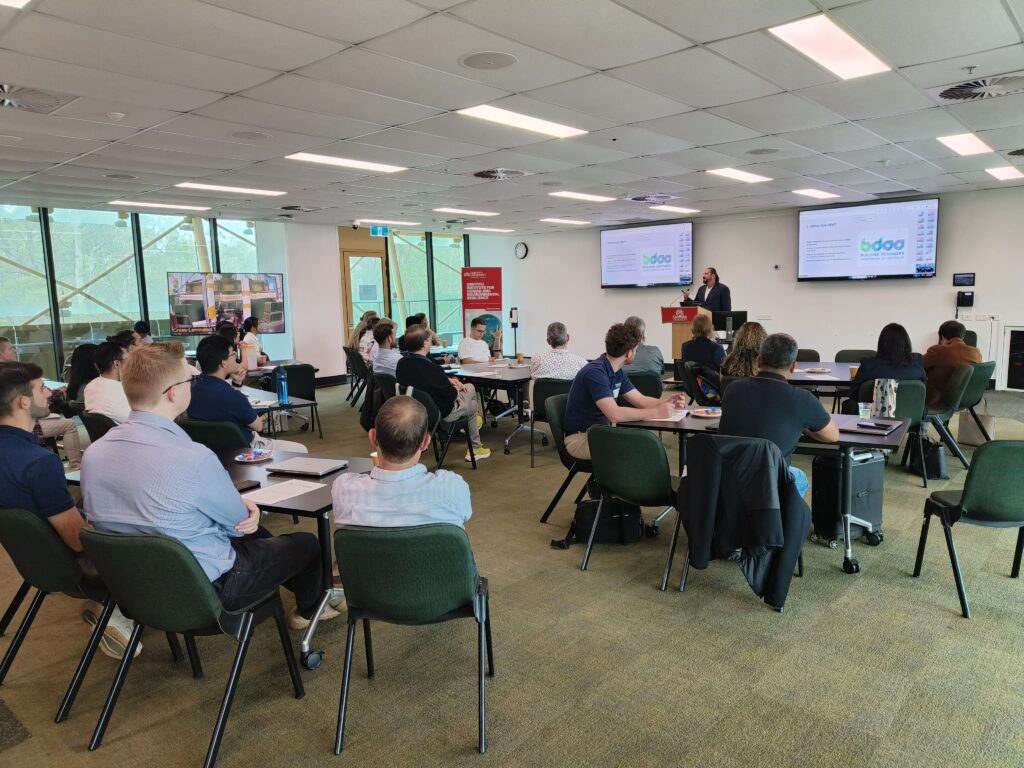
These five proposed research projects reflect a shared understanding that technical performance, market conditions, policy support, and workforce capability must advance together. Several cross-cutting themes emerged strongly across the discussions, including the urgent need for robust real-world durability data, the value of design-for-deconstruction approaches, the importance of economic incentives and clearer policy pathways, and the critical role of skills development in scaling timber adoption.
The outcomes from these roundtables provide a practical and collaborative foundation for future work within the DBI Network. The proposed projects now sit with DPI for prioritisation, and the Network will continue to support and communicate progress on the selected priorities. If you would like to stay informed or contribute to this work, we encourage you to engage with the DBI Network. You can also read the recap of the expert presentations from the workshop here.