
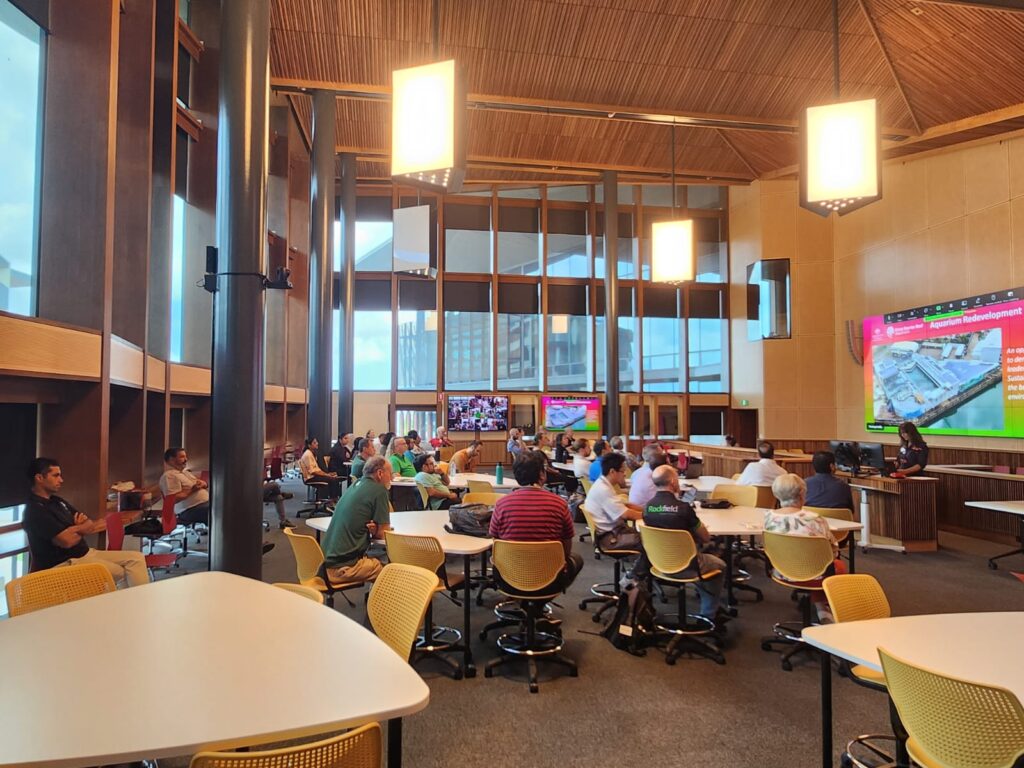
he DBI International Network Workshop at James Cook University (JCU) continued the momentum from the 2024 event, bringing together stakeholders from industry, government, research and technology sectors to fast-track decarbonisation across infrastructure, construction and the wider built environment. The full-day program featured keynote sessions, round-table discussions, exhibitions and laboratory visits, enabling participants to engage with scalable, low-carbon innovations relevant to Northern Australia and beyond. The event, attended by around 60 persons from 22 different industries/organisations, focused on accelerating the adoption of low-carbon energy and construction solutions through collaborative knowledge-sharing, case studies and action-focused cross-sector dialogues.
The agenda (as detailed in the attached program sheet) featured structured technical sessions, demonstrations and expert presentations.
Key themes & Focus areas
Discussions centred around five core decarbonisation themes:
- Low-carbon construction & modular prefabrication (Prof. Tuan Ngo): Emphasised the scalable, prefabricated building systems to increase housing supply while reducing embodied carbon, improving construction efficiency and enabling faster deployment of sustainable infrastructure.
- Energy-efficient building design & renewable generation (Ms. Sascha Thyer): Advanced building performance through integrated renewable energy systems, improved energy efficiency and innovative material choices illustrated through the Reef Aquarium redevelopment.
- Circular materials & waste-to-value innovations (Dr. Rajeev Roychand): Demonstrated the conversion of coffee waste into high-strength concrete via low-energy pyrolysis, highlighting circularity, resource recovery and low-carbon material alternatives.
- Emerging energy storage technologies (Dr. Mehdi Khatamifar): Showcased thermal batteries as a next-generation solution to enhance energy efficiency, reduce peak load demand and support building-scale renewable integration.
- Building system decarbonisation through cooling & HVAC efficiency (Mr. Gregg Zonneveld): Presented JCU’s commercial building chiller case study as a pathway to reduce operational emissions, lower energy consumption and achieve long-term economic benefits.
Find out more about the presentations through this link.
During the workshop, several displays showcased innovative products suitable for use as building materials, each with strong potential to contribute to decarbonisation efforts.
Wandarra showcased their innovative hemp-based building materials, including panels highlighting the strong potential of natural fibres in sustainable construction. Their hemp composites offer excellent thermal performance, breathability, durability, and a far lower environmental footprint than traditional materials. By utilising locally grown hemp and environmentally responsible binders, Wandarra demonstrated how bio-based materials can support energy-efficient buildings in tropical climates. It was also encouraging to see that Wandarra now has a new factory in Townsville, enabling local production of these sustainable building materials and supporting regional industry and low-carbon development.
Urban Moments showcased their innovative sustainable building materials developed to support tropical living. Their work centres on creating environmentally responsible composites that reduce reliance on traditional construction materials and help remove toxic PET plastics from the waste stream. Urban Moments’ “Green Product” initiative aims to combine renewable raw materials with 100% recycled PET to produce durable, earth-friendly building components, with a long-term vision of manufacturing bio-composites from Queensland’s renewable natural resources. Their display highlighted how these materials can support greener construction, improve thermal comfort, and promote sustainability in tropical built environments.
JCU showcased exciting research on converting tyre waste into graphene oxide and integrating it into concrete manufacturing. The display demonstrated how microwave-assisted processing can transform end-of-life tyres into high-value graphene oxide, offering both a waste-reduction and resource-recovery solution. Early results show that incorporating small amounts of graphene oxide significantly enhances concrete strength, enabling a potential reduction in the volume of building material required. This innovation presents major opportunities for lowering construction costs, reducing carbon intensity, and creating more durable infrastructure—highlighting JCU’s leadership in advanced materials and circular-economy engineering.
Laboratory Visits
Attendees also had the opportunity to visit JCU’s Microwave-Assisted Pyrolysis Laboratory and the Chiller Energy Laboratory, which served as a practical demonstration of the presentation on emerging energy storage technologies.
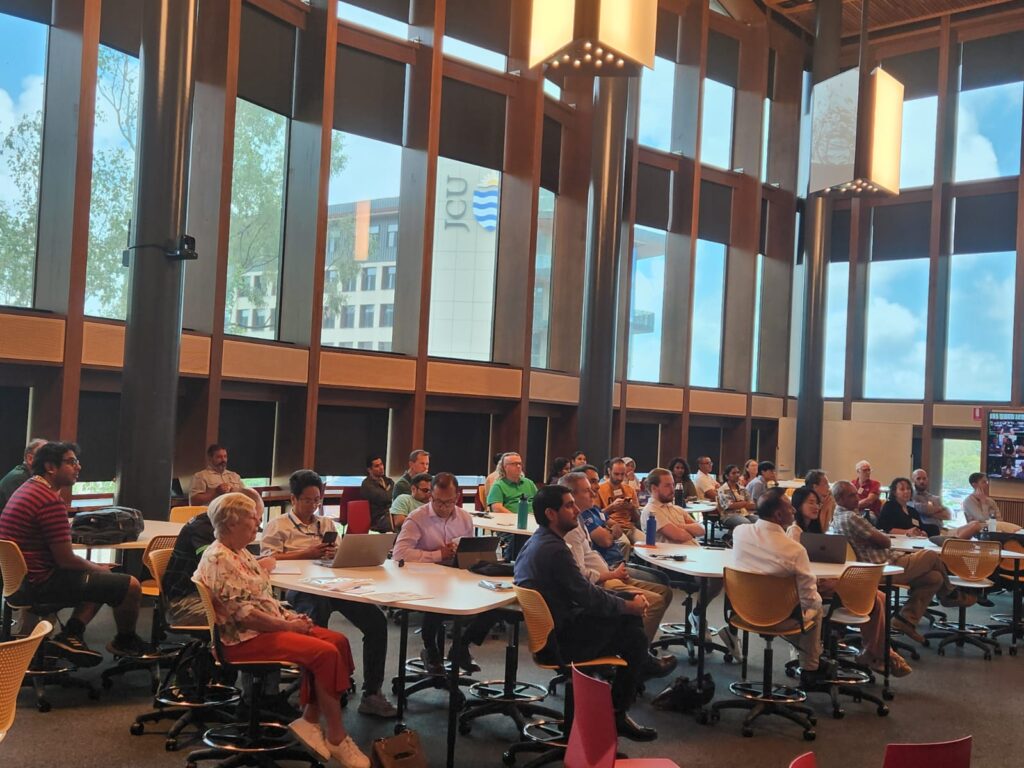
The workshop successfully advanced collective knowledge, collaboration and practical readiness for decarbonised construction and infrastructure systems. Attendees gained access to TRL-ready solutions, implementation roadmaps and new partnership pathways aimed at reducing emissions while improving efficiency, cost-competitiveness and climate resilience.
Participants were encouraged to pursue joint projects, deployment trials and applied research partnerships, forming an ongoing platform for scaling energy-efficient, material-circular and low-emissions construction solutions across Northern Australia.