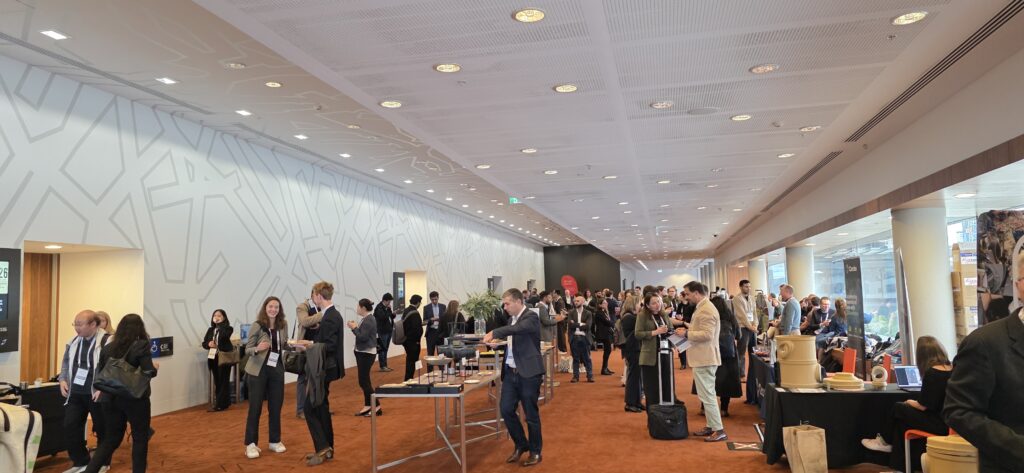
In June 2026, Melbourne hosted the World Sustainable Built Environment Conference (WSBE26) — a major international gathering focused on accelerating sustainability across the built environment. Among the highlights was a timely roundtable co-hosted by DBI (Decarbonising the Building Industry), WSBE26, and IEA EBC Annex 89.
The session, titled “Mandating Carbon: What Can Australia Learn from Europe?”, explored the implications of the newly released EU Delegated Regulation (EU) 2026/52. This landmark framework establishes a common methodology for calculating the life-cycle global warming potential (GWP) of new buildings and will require whole-life carbon disclosure in Energy Performance Certificates — starting with larger buildings in 2028 and expanding to all new buildings by 2030.
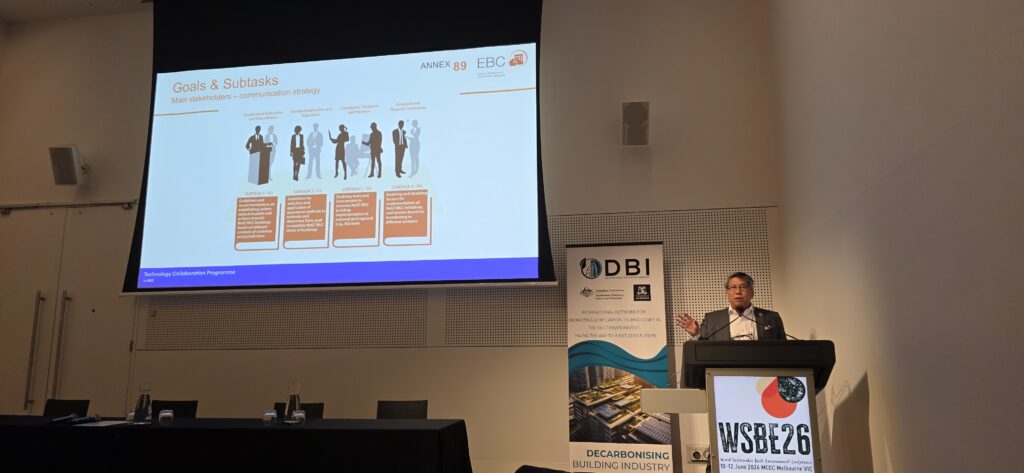
Bringing Global Expertise to the Australian Context
The roundtable brought together leading voices to unpack what Europe’s experience means for countries like Australia that are still developing their approach to mandatory whole-life carbon assessment.
Key contributors included:
- Prof. Thomas Lützkendorf, Chairman of the German Institute for Standardisation (DIN) and a globally recognised authority on building sustainability assessment
- Prof. Greg Foliente
- A/Prof. Behzad Rismanchi
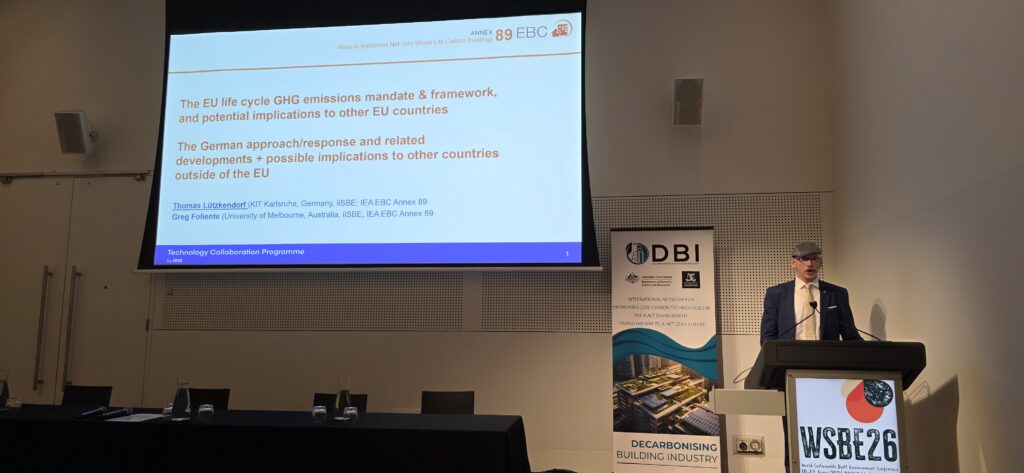
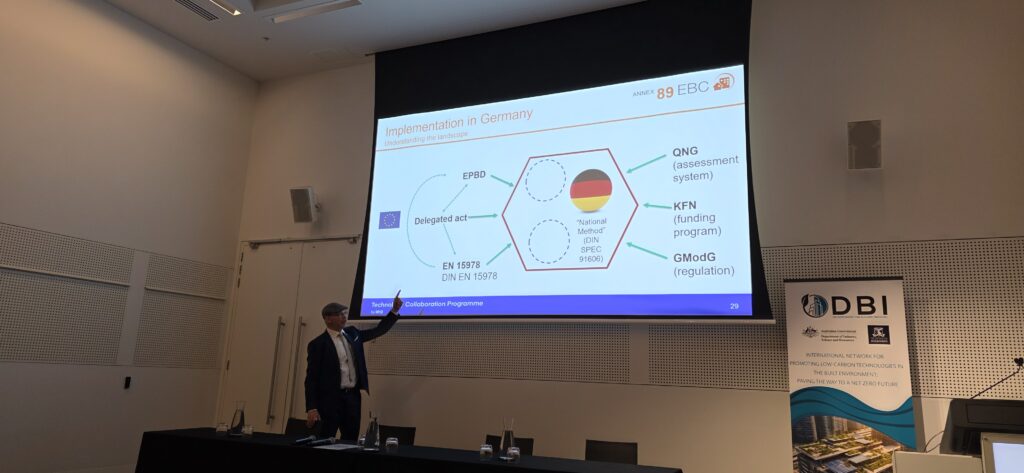
A standout moment was Prof. Lützkendorf’s presentation on Europe’s journey toward mandatory whole-of-life carbon assessment. Beyond the technical details of the new regulation, he posed a deceptively simple but profound question: What do we actually mean by “whole life” in practice?
He highlighted how assumptions about building service life, refurbishment cycles, and end-of-life scenarios can dramatically influence carbon calculations and, ultimately, policy outcomes. Without clear and consistent rules in these areas, even well-intentioned regulations risk producing misleading or incomparable results.
The Power of a Unified Methodology
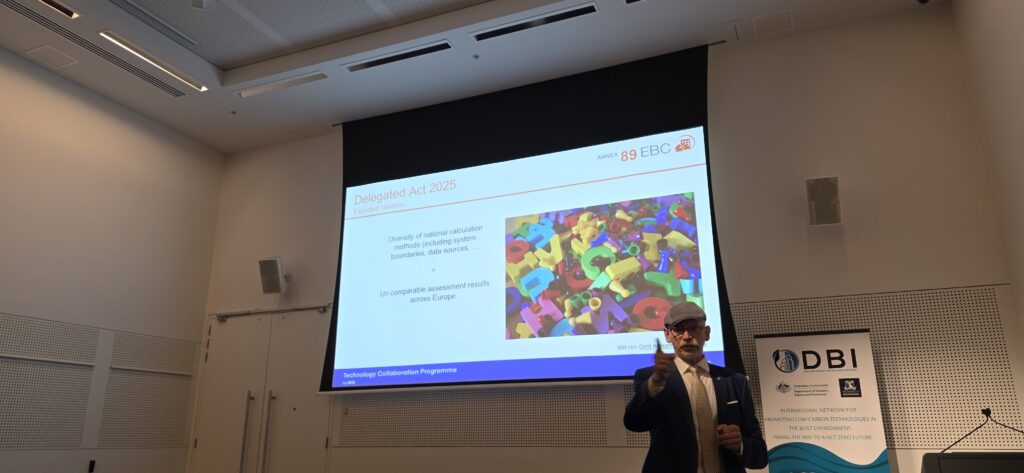
One of the strongest takeaways from Europe, according to Prof. Lützkendorf, is the critical importance of developing a consistent and unified calculation methodology. A common approach delivers several benefits:
- Greater transparency in reported results
- Increased stakeholder confidence
- Faster market adoption, because projects and regions can be meaningfully compared
This consistency helps industry move from fragmented, project-by-project efforts to scalable, system-wide decarbonisation.
Key Questions for Australia
The roundtable didn’t just look backward at Europe’s progress — it looked forward to what Australia can do differently and better. Participants explored practical questions that will shape the next phase of policy and industry action here:
- What policy pathways have proven most effective in Europe?
- Which barriers significantly slowed implementation?
- What mistakes can Australia avoid repeating?
- How can we accelerate the adoption of whole-of-life carbon assessment and reporting?
- How do we create consistent methodologies that industry can confidently and consistently apply across projects?
These questions are especially relevant as Australia works to decarbonise its building stock and align with national net-zero goals. The built environment represents a major emissions source, and addressing both operational and embodied carbon through a whole-life lens is essential for credible progress.
DBI’s Role in Bridging Global Knowledge and Local Action
DBI was pleased to partner with WSBE26 and IEA EBC Annex 89 to create space for this high-level, cross-sector discussion. Events like this roundtable are central to DBI’s mission: translating international best practice and emerging regulatory frameworks into actionable insights for Australian industry, policymakers, and practitioners.
By bringing together technical experts, academics, and industry voices, the session helped clarify both the opportunities and the complexities of moving toward mandatory whole-life carbon assessment in the Australian context.
Looking Ahead
Europe’s experience shows that mandatory whole-life carbon frameworks are not just about compliance — they are about creating the conditions for genuine market transformation. The lessons around clarity of scope, consistent methodologies, and realistic assumptions about building lifespans will be invaluable as Australia develops its own approach.
DBI remains committed to supporting this transition through research synthesis, industry engagement, workshops, and knowledge-sharing platforms. We thank Prof. Thomas Lützkendorf, Prof. Greg Foliente, A/Prof. Behzad Rismanchi, the WSBE26 team, IEA EBC Annex 89, and all participants for a rich and constructive discussion.
The conversation on mandating carbon has only just begun in Australia. The insights from WSBE26 give us a strong foundation to build on.