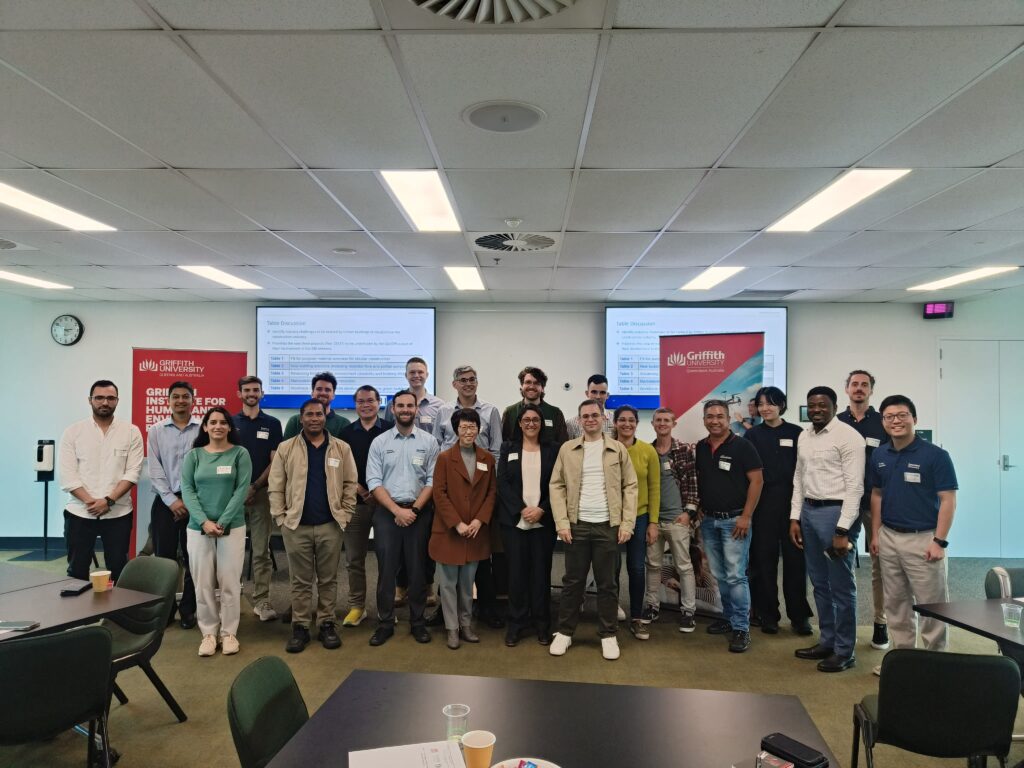
On Friday 26 June 2026, Griffith University’s Nathan Campus hosted the third workshop in the Decarbonising the Building Industry (DBI) Network series, in partnership with the Building Designers Association of Australia (BDAA). Titled The role of timber buildings in decarbonising the construction industry, the event brought together experts, industry leaders, academics, government representatives, and professional body delegates to explore how timber can accelerate Australia’s transition to a low-carbon built environment. Supported by the Griffith Institute for Human and Environmental Resilience (GIHER) and the DBI Network, the day combined expert presentations with collaborative roundtable discussions. Participants identified key challenges, opportunities, and priority research topics for the Queensland Government to progress as part of its ongoing DBI engagement, with outcomes to be reported at the next workshop.
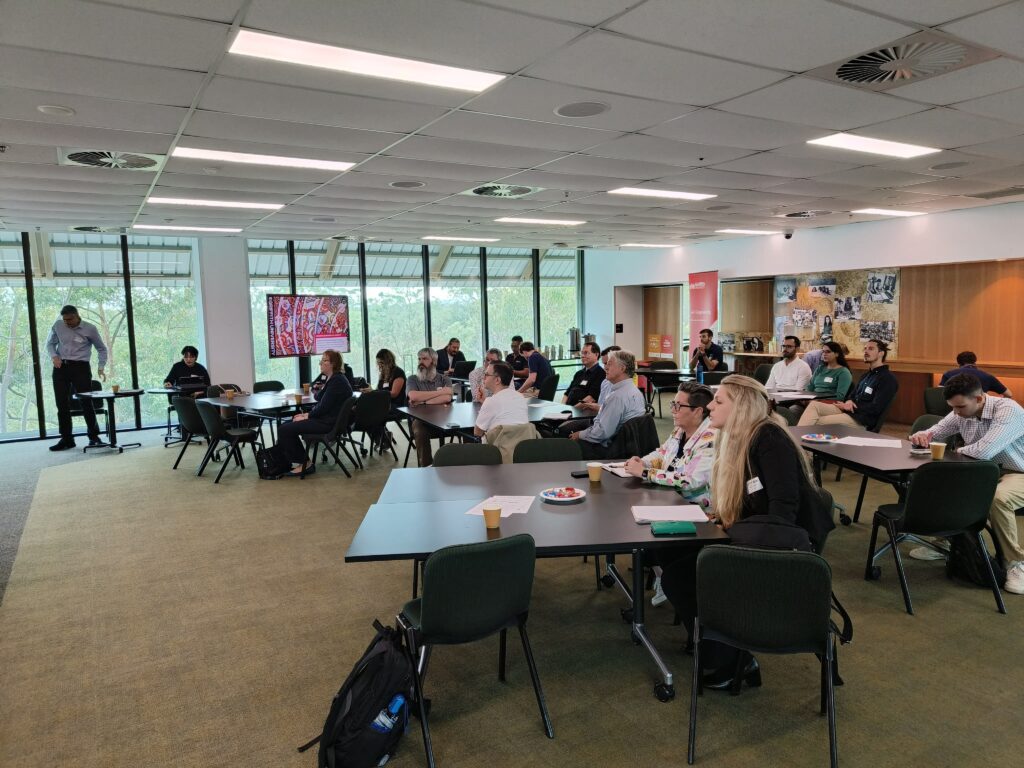
Setting the Context: Expert Presentations
The first half of the workshop featured presentations from a strong line-up of speakers representing government, academia, design practice, and industry.
Collectively, they set the scene by highlighting both the significant potential of timber and the practical barriers that still need to be addressed. Topics covered research leadership in mass timber systems and full-scale testing (Griffith University), the DBI Network’s role in national and international collaboration (University of Melbourne), industry challenges around compliance gaps and design-versus-as-built performance (BDAA), circular economy opportunities and recycling feasibility for timber resources (Queensland Government DPI), holistic lifecycle and hybrid system thinking (University of Queensland), real-world retrofit and adaptive reuse case studies (BVN Architecture), digital decision-support tools for carbon and material assessment (BDAA), and the strategic importance of timber framing in Australia’s residential sector, including new standards and carbon accounting tools (FTMA).
Key overarching messages included the need for closer integration between research and industry, robust data and verification processes, updated standards, economic incentives, and cross-sector collaboration to move from technical feasibility to scalable, reliable decarbonisation outcomes.
Find out more about the presentations through this link.
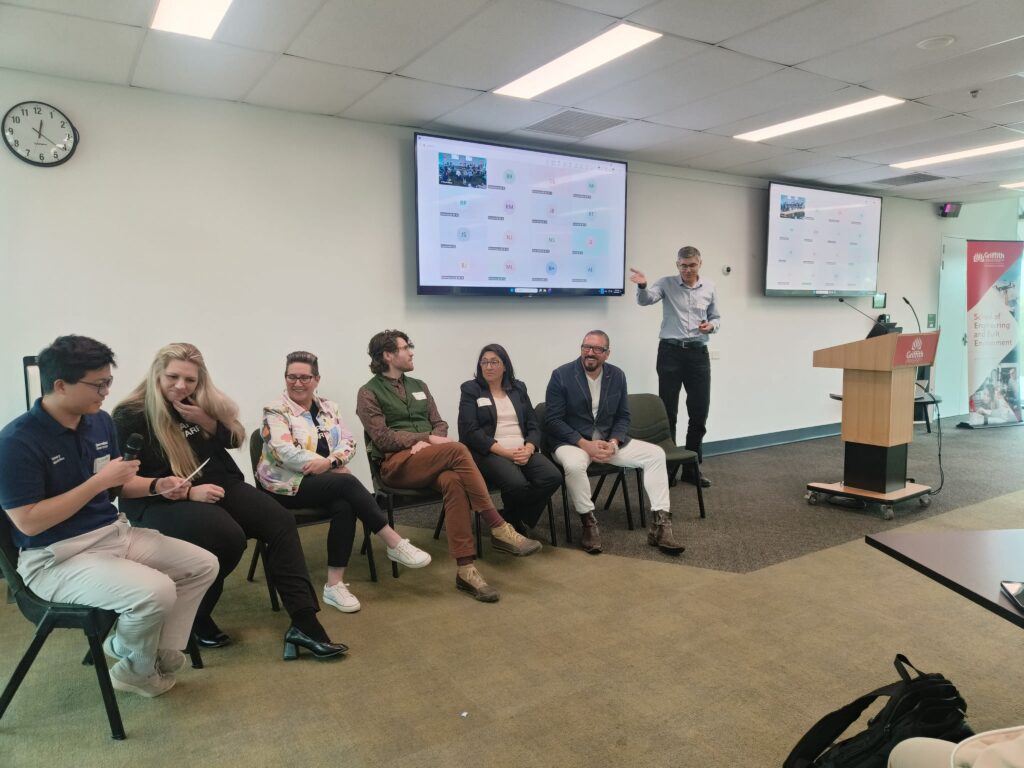
Roundtable Discussions: Shaping Priority Research for Impact
Following the presentations and Q&A, participants took part in five facilitated roundtable discussions. Each table focused on one critical theme and developed a concrete proposed research project for the Queensland Department of Primary Industries (DPI) to consider advancing through the DBI Network, with DPI invited to select three priorities. The topics addressed were fit-for-purpose material selection for circular construction; new building solutions incorporating repurposed fibre and prefabricated timber components; advancing timber durability, fire performance and service life in the built environment; marketability of timber (including repurposed products) in construction; and workforce capability and skills development towards green buildings. Each group produced a detailed project proposal covering areas such as design-for-deconstruction strategies, standardised modular systems, collection of real-world durability data, economically competitive market pathways with policy incentives, and integrated education frameworks featuring micro-credentials and pilot training programs.
Across the discussions, several interconnected themes emerged strongly. Participants repeatedly highlighted the urgent need for robust real-world data on the long-term durability, service life, and performance of both new and repurposed timber systems to underpin updated standards and support circular economy goals. There was clear consensus around the value of design-for-deconstruction principles, modular and prefabricated approaches, and improved traceability to reduce waste and maximise material recovery. Economic incentives, clearer policy pathways, robust certification, and targeted workforce upskilling through stronger collaboration between industry, universities, and training providers were identified as essential enablers for scaling timber adoption while addressing variability, health and safety considerations, and market confidence.
Find out more about the roundtable discussions through this link.
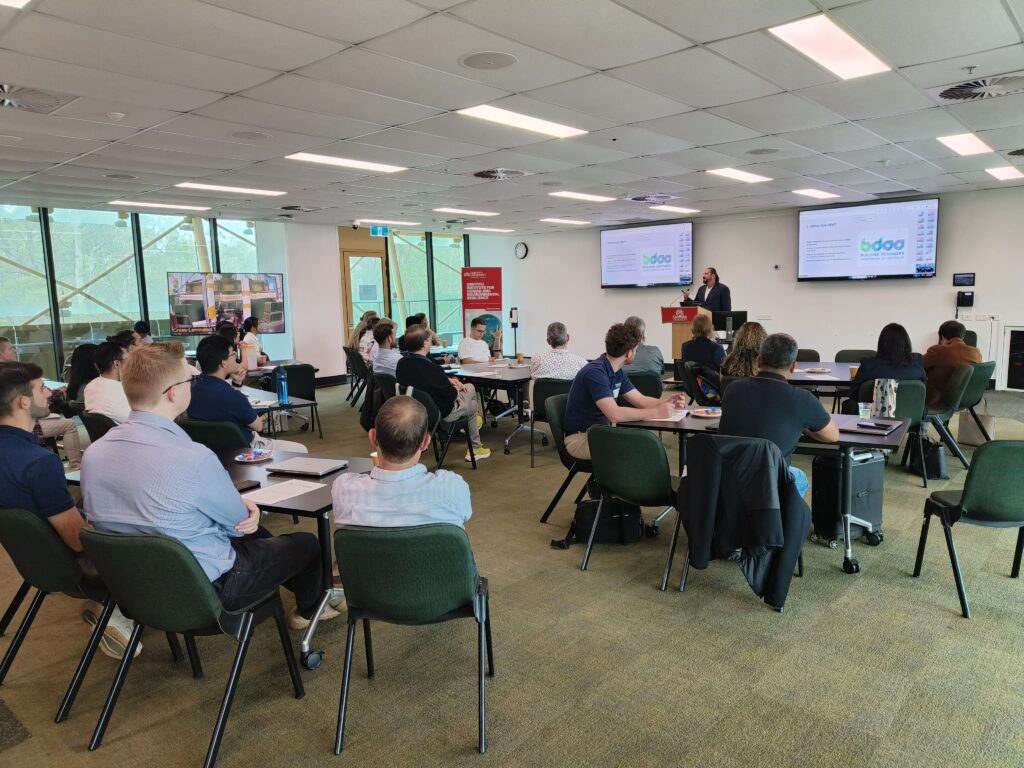
Looking Ahead
The Griffith University workshop delivered exactly what the DBI Network was created to achieve — genuine cross-sector collaboration that turns shared ambition into actionable priorities. By combining research insights with honest industry perspectives and structured dialogue, the event surfaced both the significant opportunity timber presents (embodied carbon reduction, carbon storage, lightweight retrofit solutions, and circular potential) and the practical steps needed to overcome remaining barriers. The proposed research priorities now provide DPI and the broader DBI community with a focused, high-impact agenda.
The DBI Network sincerely thanks Griffith University, the organisers, presenters, facilitators, and all participants for their expertise and commitment. Special appreciation goes to GIHER and the DBI Network for supporting the event. Detailed presentation recaps will follow shortly, along with updates as the priority research areas progress. If you work in timber construction, decarbonisation, or the built environment and want to contribute to this growing national initiative, we warmly invite you to engage with the DBI Network.